Facial PRP (Platelet Rich Plasma) is a skin regeneration treatment that uses the patient’s own blood to stimulate cell renewal, improve skin texture, and promote natural and safe rejuvenation.
Thanks to the high concentration of growth factors, PRP acts directly on collagen production, elasticity and skin vitality, and is especially suitable for skin with loss of firmness, fine wrinkles or signs of premature aging.
Book appointment
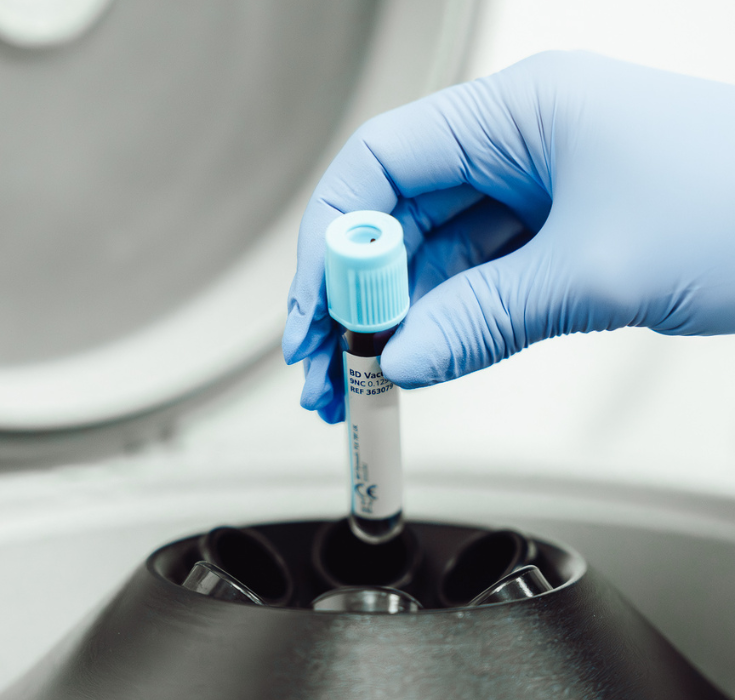
The treatment with PRP Facial begins with the collection of the patient’s own blood, which is then centrifuged to isolate the platelet-rich plasma. This fraction contains a high concentration of natural growth factors, responsible for stimulating skin regeneration.
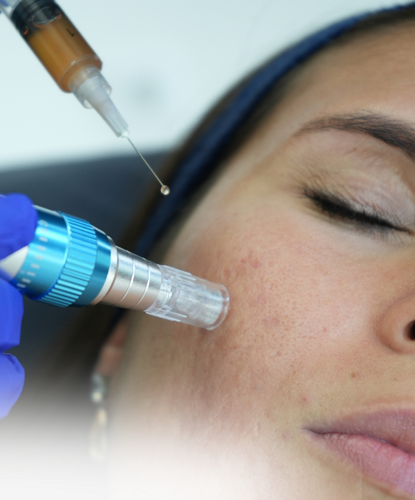
After centrifugation, PRP is applied directly to the face, through mesotherapy (microinjections with very fine needles) or combined with the microneedling technique. The procedure lasts about 30 minutes.
For good results, an initial protocol of 3 to 5 sessions is recommended, with intervals defined by the doctor, followed by periodic maintenance sessions, according to the evolution of the skin.
Book appointment

PRP can be applied to various regions of the face and other areas with signs of aging:
PRP results are progressive, usually visible from the 2nd or 3rd week after the first session, with continuous improvement in the following weeks. After the initial protocol, periodic maintenance sessions are recommended.
At IDC.Clinic, PRP treatment is performed by a physician or nurse with specific training in aesthetic medicine, using certified equipment and advanced techniques to ensure clinical safety and efficacy.
Schedule an evaluation appointment at IDC.Clinic. We explain the procedure, assess the condition of your skin and develop a personalized plan with a focus on quality, naturalness and long-lasting results.
Check out our clinical case gallery and see the real results of patients who have already had Facial PRP at IDC.Clinic.
Results
PRP can be applied to various areas of the face, cheekbones, forehead, neck and periocular area, as well as the neck and back of the hands. It is especially suitable for improving skin texture, stimulating natural radiance and smoothing fine lines.
Treatment is generally well tolerated. It may cause only a slight stinging sensation during application.
Because PRP is obtained from the patient’s own blood, the risk of rejection or allergic reaction is very low. Mild and temporary effects may occur, such as redness, mild swelling or small bruises in the treated area, which disappear within a few days.
After the procedure, it is recommended to:
The skin may show redness or tenderness in the first few days.
An initial protocol of 3 to 5 sessions is recommended, with intervals of about 4 weeks between each one, although this is always adapted to the needs of each patient. Maintenance sessions help to prolong the results.
PRP stimulates the natural production of collagen and promotes a gradual improvement in skin quality. The results become visible from the second or third week, with a cumulative effect throughout the sessions. The skin becomes firmer, brighter and with fewer imperfections.
PRP should not be performed on people with:
The first results begin to appear from the second week, with progressive improvement throughout the sessions.
Facial PRP uses the patient’s own blood to extract platelet-rich plasma, which is then applied to the skin to stimulate regeneration.
Microneedling is a technique that uses microneedles to create small punctures in the skin, stimulating collagen production — it can be done alone or in conjunction with PRP to enhance the results.
Mesotherapy is a technique of microinjections of specific substances (such as vitamins, hyaluronic acid or antioxidants), and can also be used to apply PRP.
They are different treatments, with complementary objectives. The choice depends on the patient’s needs and clinical recommendation.